Effective October 1, 2026 - New CT Laws you need to know
What Connecticut employers need to know — and do — before the compliance clock runs out
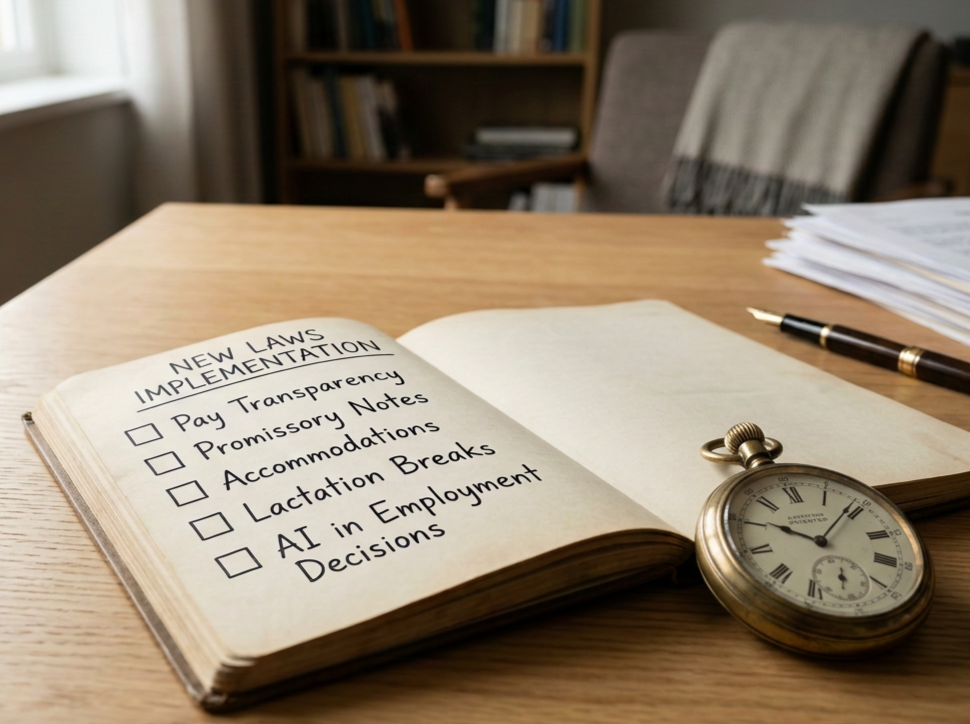
Connecticut employers of all sizes have a busy compliance calendar ahead. Beginning October 1, 2026, and rolling into 2027, a wave of new state requirements will impact how you post jobs, communicate pay practices, document accommodations, support nursing employees, and use artificial intelligence in employment decisions. None of these changes are optional, and several carry real financial and legal exposure for employers who aren't ready. Here's a breakdown of what's changing, when it takes effect, and what you should be doing right now to prepare.
1. Expanded Pay & Pay Code Transparency (H.B. 5003) - Connecticut is expanding its existing pay transparency law
All employers will be required to disclose wage ranges and benefits information in job postings.
Employers with 100 or more employees face an additional obligation: they must create and maintain a written pay code guide that explains how overtime and common pay differentials — shift pay, on-call pay, hazard pay, holiday pay, and similar codes — are calculated.
At minimum, the guide must:
• Cover at least 10 distinct pay codes, where applicable
• Be made available in English, Spanish, and any other language commonly spoken by the workforce
• Include contact information employees can use to raise pay questions or disputes
• Be distributed to new hires at the start of employment and provided alongside each pay record thereafter
Employers who use a third-party payroll provider may be able to satisfy this requirement by directing employees to a compliant guide maintained by that provider — but the underlying obligation to have one in place still rests with the employer.
2. Employment Promissory Notes Ban Now Covers Every Employer
Connecticut's ban on employment promissory notes — agreements that require an employee to repay training costs or similar expenses if they leave employment.
Previously applied only to employers with 26 or more employees. That size threshold is eliminated.
As of October 1, 2026, the prohibition applies to all Connecticut employers, regardless of size.
Requiring an employee to sign a promissory note as a condition of employment is void as against public policy. Narrow exceptions remain in place for repayment of legitimately advanced sums, property sale or lease arrangements, educational sabbatical terms, and terms set through a collective bargaining agreement — but general "repay us if you quit" training-cost clawbacks will no longer be enforceable for any employer.
3. New Written Notice Requirements for Reasonable Accommodations
Effective: October 1, 2026 (existing employees by January 29, 2027)
Employers must now provide written notice of an employee's right to request a reasonable accommodation under disability law.
This notice must go to:
• New hires, at the start of employment
• All current employees, no later than January 29, 2027
• Any employee who reports a disability, within 10 days of that report
Employers can satisfy this requirement by displaying an approved Labor Commissioner poster, but should confirm their current postings and onboarding paperwork actually cover it — this is an easy one to miss if you assume an existing ADA poster already does the job.
4. Strengthened Lactation Break Protections (H.B. 5003)
Connecticut's lactation accommodation law has been amended to require reasonable break time for an employee to breastfeed or express breast milk, expanding on the prior standard of providing breaks tied to already-scheduled break periods. Employers should revisit their lactation accommodation policies and manager training to reflect the broader standard.
5. Artificial Intelligence in Employment Decisions (S.B. 5, the AI Responsibility and Transparency Act)
Effective: Discrimination provisions: October 1, 2026 | Full notice requirements: October 1, 2027
Connecticut's new AI law is one of the most significant changes on this list, particularly for employers using AI tools to screen resumes, score candidates, or otherwise support employment decisions. For any "automated employment-related decision process," employers will need to provide:
• Pre-use notice to candidates/employees that an automated process is being used, why, how to opt out, and who to contact with questions
• Following an adverse decision, a high-level statement of the reasons for that decision, plus an opportunity to examine and correct the personal data used
Employers may not use AI tools to make employment decisions that discriminate based on a protected characteristic — that provision, along with a separate rule barring AI from being used to alter collective bargaining agreements or union representation, takes effect October 1, 2026. AI developers are required to give employers the tools needed to comply without disclosing trade secrets, but the compliance obligation itself sits with the employer using the tool. If you use applicant tracking software, resume-screening AI, or scheduling/scoring algorithms, now is the time to inventory those tools and confirm your vendor can support these notice requirements.
What Employers Should Do Now
• Audit current job postings and update them to include compliant wage range and benefits disclosures
• If you have 100+ employees, begin building your written pay code guide now — this is not a quick document to assemble from scratch
• Review offer letters, training agreements, and separation paperwork for any promissory note or repayment language that will become unenforceable
• Update onboarding packets and post required notices so every new hire receives written accommodation-rights information
• Calendar the January 29, 2027 deadline to distribute accommodation notices to your entire current workforce
• Revisit lactation accommodation policies and train managers on the broader "reasonable break time" standard
• Inventory every tool in your hiring and employment process that uses AI or automated scoring, and confirm vendors can support required notices and data-correction rights
Not sure where your organization stands?
This is a lot of change to absorb on top of everything else on your plate. True North HR Consulting, LLC helps Connecticut employers translate new legal requirements like these into practical policies, updated paperwork, and manager training — before an audit or an employee complaint forces the issue.
If you'd like a compliance check-in on any of the changes above, reach out and let's put a plan together.
True North HR Consulting, LLC
Email: jessicas@truenorth-hr.org
Website: www.truenorth-hr.org
This newsletter is provided for general informational purposes only and does not constitute legal advice. Employers should consult with qualified employment counsel to confirm how these requirements apply to their specific organization. Source: Jackson Lewis, "New Laws Are Changing Connecticut Employers' Pay, Accommodation, AI Obligations in '26/'27."
